Thursday, April 01, 2010

National education feature

I meant to link to this earlier. The Nut Graph had a very interesting 4-part feature reviewing the national education system. I am personally convinced that any substantial reform of Malaysia must reckon with the way education works here.

Going private
Chinese medium schools to the rescue
The homeschooling option
Whither national education?

Labels: , ,

Saturday, January 02, 2010

Latest on use of word "Allah"

If a Malaysian High Court ruling stands, Roman Catholics here can resume using the word "Allah" as their translation for God in their local language.

The court on New Year's Eve overturned a three-year-old government ban that prevented the Catholic Church from using the term Allah in its literature. The Arabic word has been used by various faiths in this Muslim-majority nation for centuries, and the church argues that it is the only suitable way to denote God in the Malay language.

Read the whole thing.

Labels: , ,

Wednesday, November 18, 2009

Observations on being home

If you haven't figured it out yet, I am still in Malaysia, and have been for the last 6 weeks or so. The process of resolving whether I can get a new visa is still frustratingly slow. It's certainly nice to be back home, but once you've started getting used to having your favourite foods available again, being in limbo does wear on you. People have been very nice and have tried to be encouraging; more than one person has said to me: "You've been working too hard, so you should enjoy the holiday!" There's also no doubt that God has brought me back for good reasons, some of which I can guess at, others I might not know. But I am raring to head back. Anyway, here's a bunch of stuff I've been picking up.

Reverse culture shock #1. After being in an egalitarian society where 70 year olds expect me to call them Mike, not Mr. Jones, and to discuss things on a peer-to-peer level, I'm finding myself a little confused about what is and what isn't appropriate to talk about with those older than me. I think it doesn't help that there're degrees of differentiation too! My family would be a bit more traditional and there's more of a hierarchical mindset, whereas my church is relatively speaking, much more relaxed. I suspect I'm erring excessively on the polite side.

Reverse culture shock #2. So when an uncle (in Malaysia, anyone who is reasonably older than you is often addressed as such, not just family. No responsibility is taken if you misjudge somebody's age!) offered me coffee, I said immediately: "Yes, please!" After watching his body language thereafter, I realised then that I should have played the "No No" game, making some tentative refusals before accepting his offer. Ergh.

Reverse culture shock #3. Most of the literature dealing with this subject note that symptoms often include
  • Difficulties explaining coherently your time and experiences abroad. Those who listen don't have the frame of reference or travel background to understand.
  • Reverse 'home' sickness. Feelings of being lost and lonely.
  • The relationships at home have changed. The returnees as well as those who stayed at home have altered.
    I think I've experienced bits of this, and it's reminded me that when I finally come back home long-term, whenever that might be, I would have to deal with this.

    Theory and praxis. I think it was the veteran missionary Martin Goldsmith, who used to pastor a church in Malaysia, who said: "Asian (or was it Malaysian?) Christians are short on theology, long on ethics." By that he meant that Asians tend to dislike theoretical musings for its own sake, but want to see its connection to daily life, the "real world" if you like. Otherwise it would just be dismissed as irrelevant. This has positives and negatives. Positively, it immediately lends Christian reflection a pastoral and missional orientation. Theory and practice must not be separated. Negatively, this often leads to pragmatism, whatever works. They just want to know "what to do", and to think too deeply is "unspiritual". I bring this up because I am sensing this a little.

    Bible study. I was also thinking about how our Bible studies work. In Asian Bible studies, it is common for people to immediately think about their own experiences and contexts and to share them as they go through a passage. I was previously very critical of this, and I think there is good reason to be. There's always the danger of reading our own experiences into the text and seeing things which aren't actually there. Tangents also often lead the group to chasing red herrings and completely missing the main point.

    But I now think I've allowed myself to be over-critical. Rightly done, I see that there is a lot of value in just naturally intertwining our understanding on the passage with reflections on our lives. I've been observing my home fellowship group and though we don't always get it right (and to be fair, who does?), I thought that for the most part, whenever somebody shares or offers a reflection, it's been tied to the text and not just some random whimsy to offer a thought for the day. It's just their way in which they allow the Bible to bear on our lives. In fact, it's challenged me because I probably don't let God's word really peer as deep into my soul as it should. I suppose the cultural anthropologists might argue that this is because "Western" thinking is more linear and "Eastern" thinking is more circular. So while the principles remain the same: we need to know what the Bible says and means before we can apply it to our lives, there is a variety of models, and I know I can't lead a Bible study here exactly the same way as I would in the UK.

    Social networking. Media commentators have picked up on this (eg: here, here, and here), but seeing it for myself was quite different. I was quite stunned by the virtual connectedness of the teenagers in my youth group. The amount of photos taken and placed on Facebook was quite something. Again, social commentators have noticed that we are once more heading into a world where the boundaries between the public and private spheres are blurred, as it was in a pre-industrialised age. But it's still jarring to see photos of myself that I didn't even know were being taken suddenly appear on the Net!

    Spiritual warfare. I wasn't home for that long before I heard of a case of demon possession. Growing up, of course, it's not that rare to hear such stories, but it reminded me once again that it's certainly one area to think about for anyone wanting to do ministry in Malaysia. What you don't want is to capitulate to the latest faddish teaching on the one hand or to ignore the spiritual realm on the other.

    Wrestling in prayer. I think I identify a little more with the psalmist now. "Lord, please help me to trust you. I know you are sovereign over all, I know that you are good, and that your plans are best, so whatever the outcome is, help me to accept it. [clenches teeth] Lord, help me not to be so half-hearted in what I just said. It's going to be hard if you don't allow me to go back, but help me to grow in my trust. But God, I do believe you are a generous Father, and that Christianity ain't fatalism. My prayers do count for something, don't they? So do the prayers of others? So I pray you'd allow me to head back - I don't see how that's a bad thing. [Pause] I mean, Lord, I'm not actually presuming to tell you what's best for me, oh no, not at all. But it's a fair request? [Pause] Ummm, but I know you're more concerned about me being more like Jesus, more concerned about being more like what you've made me to be than where I am. Consider it all joy and all that. So ummm, help me trust you again no matter what. [Deep breath] But...pretty please?" It's ping-pong prayer, back and forth, back and forth.

    Sin. You'd like to think that you've grown stronger, and then you come into a stressful situation and learn that your sinful patterns are more entrenched than you realise. Thank God for his grace.


    † Expand post

    Labels: , , , ,

  • Tuesday, November 10, 2009

    Assimilation and identity

    The late missiologist Paul Hiebert, together with Young Hertig, has an interesting though dated (1993) article on Asian immigrants in urban cities, with particular reference to North America. They examine the issue of identity and assimilation, suggesting that the core question is: to which culture does the immigrant really belong? Each generation after immigration approaches and answers this in a different way.
    1. First generation - clear sense of identity. That is, their identity is very much tied to their "home" culture. They might develop survival skills to cope in the new culture, but their values, beliefs, things & events they find significant etc., are those of "home". If women come from patriarchal cultures, they are unlikely to be exposed much to the new culture, from staying at home etc., and so are often isolated.

    2. 2nd generation - deep identity crisis. They encounter schizophrenia, for at home and within the family, they absorb certain values and beliefs, but in school and public are enculturated into the new culture. So you have a clash, with this generation often having to make decisions about how much to take on board parental values, resulting either in withdrawal, rebellion, or more likely, compartmentalization. The best case scenario is if one is able to integrate the best of both worlds. Add in other factors such as the different paces at which siblings within a family might assimilate and it gets even more complicated. One critical factor in the assimilation of second generation young people is the attitude of their parents. Other factors like social mobility etc. all count for something too.

    3. 3rd and 4th generation - assimilation and appreciation. Here the identity crisis is not so acute, because they have figured out their place in society more, whether by carving out a niche for themselves or completely assimilating. But when we get to 4th/5th generation, we find that some begin to seek their roots once more, especially if their racial features are more distinct. Here we may find the problem of "hidden immigrants" - eg. looking Chinese on the outside but born and bred in America, and so actually being completely different culturally.
    Also, at a deeper level, language becomes an issue. Hiebert and Hertig quote Cheryl, a Korean teenager in LA: "I try to speak Korean when I talk with my mother, but the most important emotional stuff I say in English because I cannot express it in Korean. So my mother does not have any idea what I am trying to say. It is really frustrating. I don't understand why she does not try to learn English. She has lived here almost twenty years." I think a few of us Malaysians will share similar experiences.

    So why am I blogging about all this? There's the personal side, of course: I have often wrestled with questions such as this partly due to my upbringing, my family and educational background, the friends that I have, and of course, as someone involved in ministry with international students in a Western country. And because I just wanted to see if I could stimulate some thoughts from my readers, and the article above provides some important intercultural, and indeed, intergenerational insights which are relevant for the Malaysian context, although obviously we are very different in many ways. I think, for example, of the differences between English and Chinese-educated Chinese and the questions of trying to "preserve" a culture versus the "interaction" of cultures. Or the often frustrating family dynamics that those of us who are younger struggle to decipher - why are parents always so obtuse? (Apologies for the examples being obviously Chinese, that's my makeup). Or the wider politics of race and racial discourse - would you describe yourself as Malaysian or Malay/Indian/Chinese/Bumiputra/Iban/Kadazan/Martian first? I actually assert my "Malaysianness" more, I think, but I know others will differ from me.

    Some might take exception to using an article on the "immigrant experience" to draw parallels to the Malaysian situation, since "immigrant" itself is a contested term in Malaysia. A big number of us will resent being labelled as pendatang, as if we were 2nd class citizens. That, of course, is to miss the point. It's simply a historical fact that many of us will have ancestors who at some point immigrated to what we now call Malaysia. I know we live in a plural society, so I wonder if we're not so much assimilating into a clearly marked majority/mainstream culture as forging a distinctively "Malaysian" culture, although again what that is is up for debate. How do you compare Sino-Kadazans in Sabah with the Nyonyas in Malacca? But maybe again the lack of flattening is a good thing. It means we're more aware that we all have particular categories and assumptions that affect how we view the world.

    Plus, these are questions, I am convinced, we need to reflect on as Malaysian Christians, especially as it impacts on things like pastoral practice, evangelism and so on. It also challenges us to consider afresh what it means to consider ourselves to be Christians first and foremost, to be sojourners in this age. As Tim Kellers notes:
    "Identity is a complex set of layers, for we are many things. Our occupation, ethnic identity, etc., are part of who we are. But we assign different values to these components and thus Christian maturing is a process in which the most fundamental layer of our identity becomes our self-understanding as a new creature in Christ along with all our privileges in him."
    OK, I've rambled with no clear direction for long enough. Comments welcome. For more on the migrant experience, I can think of no better teacher than the short stories of Jhumpa Lahiri. For an intro to cross-cultural issues, try Sarah Lanier's From Foreign to Familiar or some of Duane Elmer's books.


    † Expand post

    Labels: , , ,

    Sunday, November 08, 2009

    Litany of complaints

    I was at a dinner tonight, and as is fairly common at such occasions, conversation soon turned towards the injustice located in the structures of Malaysian society. There was the litany of complaints directed at our education system, corrupt bureaucracy and so on.

    I've been thinking about why I usually feel a little uncomfortable whenever the floodgates open. OK, so part of it is probably that by nature, I'm not a happy bunny when it comes to conflict. I like the still waters, not the grand rapids, thank you very much. Maybe I'm guilty of apathy. But I do believe that to pretend that all is well, to be tidak apa about the wrongs that the innocent suffer, the way that so many crooks seem to get away with their abuse of power, is wrong, plain and simple. It's also probably fair to say that in context, the 2008 political tsunami notwithstanding, such talk arises perhaps because there is a feeling that we need to be woken up from our general malaise. We can't maintain the status quo forever. So such conversations are full of heat and light.

    And yet. Here are a few reasons why I feel unsettled whenever such talk occurs among Christians (btw, this isn't necessarily true of tonight's conversations; they simply sparked the thought):

    1. These conversations sometimes have the whiff of self-righteousness around them. Look at how rubbish everything else is. It's as if the taint of sin has affected everything and everyone apart from the one pontificating away. We feel justified by the way we remain above the fray. The purity of our motives. Surely there must be a humbler way to express our anger and sadness at the way the current system is broken.

    2. These conversations are often tinged with cynicism. Things will always be this way. It's better to send our children away. I'm like, whatever happened to God bringing all things in heaven and earth under Christ? Whatever happened to God putting the world to rights? Maybe again, by nature, I'm an idealist, a romantic, a head-in-the-clouds kind of guy, but it seems to me that Christians have the gospel - good news - the good news that shouts "Jesus is the crucified King!" and calls on us to turn from sin to the living God. And that should shape our responses to injustice.

    3. These conversations lose sight of God. My immediate point above suggests that sometimes we act more like fatalists than theists. We forget God is on the throne. He does care about what goes on in his world, not just churchy things. He can effect change, and he loves to use his people to do it. And although contemporary Christianity sometimes shun the image of God as judge, it's actually good news, because it reveals our God is just; the bad guys aren't gonna get away with it. But our God is a merciful God as well. And this is great news, because to our horror, we discover that actually, we are more like those we condemn than we care to admit. We too are in need of mercy, and in view of God's mercy, we offer our bodies as living sacrifices, not the other way around.

    O Lord, the next time we are tempted to recite from the Book of Common Complaints, help us to remember instead the Lord's Prayer. For there we find nourishment in remembering who our Father is, strength as we ask for his kingdom to come, and humility as we acknowledge our need for forgiveness. Then maybe we can go out into the world and shine like stars in the universe, as we hold out the word of life.

    Labels: , , , ,

    Saturday, September 26, 2009

    curveballs

    Some of my readers would know this by now. Due to the way my visa situation has developed, mostly due to the way the entire immigration system in the UK has been restructured, I'm leaving the UK next week. Hopefully, this is merely temporary, and I would be back in a few weeks time with a fresh visa, but nothing is entirely clear-cut at the moment. In theory, all the paperwork seems fine, but it's hard to be confident in the current climate.

    It is quite a worrying and disappointing time for me, of course, to say nothing of the disruption it's causing the international student ministry here. I also have had, and probably will continue to, wrestle with trusting God and his sovereignty and goodness. It also means I'm forced to evaluate how much stock I'm putting into my own plans and whether I am willing to allow God to change them.

    Nonetheless, I can already see the positive side of going home at this point in time. It'd be great to actually be back in Malaysia for more than just a week or so and see how it's going, to catch up with people (maybe even some of you?), to have some reflection time, and as my supervisor put it, to see what good works God has prepared for me to do.

    Thank you to those who have prayed and continue to pray for me. It is much appreciated.

    Labels: ,

    Wednesday, September 02, 2009

    Myth-busting

    Unsurprisingly, quite a few introspective "state of the nation" pieces coming out.

    There's an outsider's perspective, from a decidedly secularist viewpoint: The myth of a moderate Malaysia, originally published in Forbes. I get the sense that the piece is more about his larger point that religion is best subordinated to modernity, with Malaysia as his prime example, rather than Malaysia itself. But it's an interesting piece nevertheless, since it probably is representative of the beliefs of many of the urban, upper-middle class, Malaysiakini-reading segment.

    Another myth to come under attack is that of the monolithic community. This is a piece I'm generally happy to agree with.

    I've also gone back to read my post from over a year ago - Race meets the Malaysian church, in conversation with my friend WN, who incidentally is trying to think through what it means to be a citizen at the moment over at his blog. And I don't think there's anything I'll change from that post.

    Labels: , , ,

    Monday, August 31, 2009

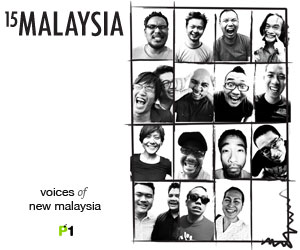
    15Malaysia

    Happy National Day Malaysia!

    15Malaysia
    Old news for those back home, but I have enjoyed the 15 Malaysia project, a collection of short films (about 3-6 minutes each) by some of the nation's leading artists highlighting the joys and frustrations of Malaysia and Malaysians. Pete Teo, one of our singer-songwriters, was apparently one of the prime movers. One video is being released every few days. They include some unexpected figures!

    You can also check them out on Youtube.

    Labels: , , ,

    Friday, August 21, 2009

    Ah Long sequel

    This is one of my favourite videos of all time - Malaysian humour at its best. Long story short: kept me sane when I was taking my Finals exams 3 years ago now. Then I found out yesterday there was a sequel! Here it is: Ah Longs advertising Balsam Welding! (Probably should watch the first video beforehand)


    Apologies to non-Malaysians, this is all going to appear very strange to you...

    Labels: , ,

    Monday, July 20, 2009

    Taking stock

    Angry in Malaysia by Tan Soo Inn

    "My dear brothers, take note of this: Everyone should be quick to listen, slow
    to speak and slow to become angry, for man's anger does not bring about
    the righteous life that God desires. Therefore, get rid of all moral filth and
    the evil that is so prevalent and humbly accept the word planted in you,
    which can save you." (James 1:19-21 TNIV)


    If you are a follower of Jesus in Malaysia, you are probably angry. Consider
    the following...

    Read the whole thing.

    Labels: , ,

    Saturday, May 02, 2009

    Malaysian issues

    On current form, I'm afraid this blog is probably going to be nothing more than a linking outpost for a little bit.

    There was an interesting survey, albeit a little dated, to discover the view of Malaysian Muslims on questions of identity, as well as related issues and concerns. Makes for interesting reading, and some of the findings were surprising, at least to me.

    More contemporary is the recent ruling on the conversion of children in divorce cases where one of the spouses have converted. There's a good summary and analysis of the issues involved at the Nut Graph.

    (HT: Ps. Sivin)

    Labels: , ,

    Thursday, April 09, 2009

    New Cabinet

    The Malaysian Insider has a breakdown of Prime Minister Najib's new cabinet.

    Political analyst Khoo Kay Peng says elsewhere that it lacks the wow factor, but truth be told, it was hard to see how Najib could ever find that elusive magic wand. Unless he installed lots of unknowns, but he would probably have ended up with a "what?!" factor instead. Or invited PAS to form some sort of unity government (joke!!!). I wonder if there's a bit of a talent gap in the next generation of politicians? The Cabinet could definitely be trimmed some more - I've always been baffled by the existence of the Federal Territories Ministry.

    All in all, nothing all that surprising. We haven't seen the end of the aftershocks from the political tsunami of March 8 just yet.

    Labels: , ,

    Friday, February 06, 2009

    ...and a note on Perak...

    Thursday, October 09, 2008

    The wrap

    Looking back, I think I had a pretty good week. A tiring one for sure, as I've had something going on every single night, and in some cases, had no break between the afternoon and the evening, but God was good in granting me enough energy and helping me to pace myself. Tuesday morning, for instance, I was simply peopled out and so I made sure I got some time to myself during lunchbreak, chomping on a wrap while walking along small, lonely alleyways, which really helped for that evening, where I would have been engaging lots of new faces.

    So that's the personal update. Here's an internet roundup update of sorts! Here's some good stuff on the web:

    Greg Gilbert at 9Marks has done some reflecting on what the gospel is. It's stimulating. Kingdom language gets thrown around a lot nowadays when it comes to defining the gospel, often over and against a "repentance of sin" gospel. And yet I think the two must hold together, and we must be clear on what we mean by "kingdom". But I accept it's quite hard to be able to articulate it clearly, simply because I guess the gospel is both simple and yet so comprehensive in scope it's hard to say everything in a short soundbite!

    The Cruciform Life. I am grateful to those who first exposed me to worldviewish thinking, and how a Christian worldview has helped me in seeing the world with new glasses, as it were. But there is also a danger that the language of worldview devolves into an intellectual game with no corresponding desire to grow to be more like Jesus. But as Jimmy Davis points out in this article, ""my worldview was not biblical until it was also cruciform". (Cruciform simply means cross-shaped). One book that does a great job of showing us the entire shape of the Christian worldview is J. Mark Bertrand's (Re)Thinking Worldview.

    I was really fascinated by English professor's Mark Edmundson's observations about my generation (though in an American context) in Dwelling in Possibilities. A snippet:
    "They want to study, travel, make friends, make more friends, read everything (superfast), take in all the movies, listen to every hot band, keep up with everyone they've ever known. And there's something else, too, that distinguishes them: They live to multiply possibilities. They're enemies of closure. For as much as they want to do and actually manage to do, they always strive to keep their options open, never to shut possibilities down before they have to."
    There are some other startling observations too, like the one about people going to parties only to whip their mobiles out, or the advent of the age of the iPod, which allows us all to have our own personal soundtracks. Well worth reading. I suspect that even non-American readers will be able to recognise hints of similar things in their own contexts.

    Mission in the 21st Century. The title is indicative of its content! A survey of what the current mission situation looks like globally, and some brief reflections on how to adapt and engage new realities and challenges.

    After Lehman Brothers: Desperate City wives. ("The City" in London refers to the central financial district like Wall Street does in New York). I know it's fashionable at the moment to treat all investment bankers with disdain and to rejoice at their comeuppance. And I don't doubt the fact that in many, many cases, they've been a showcase for greed. But they've also been a convenient mirror for many to project their moral superiority on. I thought this was a very well-done feature, simply getting us into the shoes of the spouses of the (formerly?) wealthy, and also perhaps giving us occasion to reflect on our own habits without being preachy.

    Novelist Margaret Atwood looks at the cultural history of debt. A very interesting exploration and a model of how the tools of literary analysis could be applied!

    A Conversation with Tan Twan Eng in the Far Eastern Economic Review on the state of Malaysian writing and other things. Tan Twan Eng's novel The Gift of Rain was longlisted for the Booker last year. Haven't read it, and not quite sure if I will. There's another novel by a Malaysian writer which has gotten good press this year - Preeta Samarasan's Evening is the Whole Day. I'm wondering too if I should tackle that one, looks like it would not be light reading though.

    I think all the above have substance, so do go have a look! :)


    † Expand post

    Labels: , , , , , , ,

    Wednesday, October 08, 2008

    Call for Malaysian Christian leaders / thinkers

    A plug on behalf of Dave / The Agora:

    The Church in Malaysia urgently needs to develop a thoughtful and comprehensive answer to contemporary challenges to its life and mission. In response to this task Kairos Research Centre was set up in 1993 by a group of evangelical leaders...

    We are in the process of setting up a committee of people who are keen
  • to form study/research groups,
  • organize events/forums that encourage and facilitate Christian reflection on issues relevant to Malaysian Christianity,
  • do research/write
  • make available the rich library resources at Kairos to contribute towards the development of Christian leaders and thinkers.

    So if you know anyone who would be keen to join and participate on a voluntary or salaried basis. Do let us know at hedonese at yahoo dot com or enquiries at kairos-malaysia dot org

    Labels: , , , ,

  • Friday, September 12, 2008

    Crackdown?

    Am not liking some of the latest reports coming out of Malaysia...

    Malaysia cracks down as opposition bids to seize power

    Some context: Rising racial tension in Malaysia

    Nat Tan's reading of the situation.

    Newsfeature on the ISA (HT: Ps. Sivin)


    I can only speculate about what's going on, but this does smack somewhat of desperation. Praying that the situation does not degenerate. In the meantime, a reminder as Christian citizens: 'Live such good lives among the pagans that, though they accuse you of doing wrong, they may see your good deeds and glorify God on the day he visits us.' (1 Peter 2:12)

    Labels: , ,

    Sunday, August 31, 2008

    Update 2.0

    Well, Merdeka Day slipped by almost unnoticed. It's certainly been a subdued affair compared to the half-century extravaganza we had last year. I confess to almost forgetting about it myself. Come to think of it, it's just occurred to me that I didn't meet or even talk to a single Malaysian today! :(

    I did however, have a good chat with a Zimbabwean student and a Japanese researcher this evening. I was glad of the opportunity to encourage one, even if feebly, to not leave his life unexamined, to partially quote Socrates, and to use his time in studentdom to think about what being a Christian means, on the one hand. On the other, I had an enjoyable discussion with this lovely Japanese guy and God was gracious that we could naturally talk a little about Christianity during the course of the conversation and that he was interested to know more.

    Still, for those of you who might think my life consists of nothing more than deep chats and reading theological books, let me now immediately disabuse you of such romantic notions! :-p Over the course of the week, I've done some weeding and hoeing, learnt about food hygiene, and did more cleaning up. I do find that I can barely muster up any enthusiasm to write anything at the end of the day.

    Back to the Merdeka theme, just thought some of you might be interested in Project Malaysia, a forum set up by Malik Imtiaz. I haven't browsed it much, but it looks like it's worth a look. (HT:Rocky Bru)

    Will keep on trying to blog, and not reduce it to weekly updates. Thank you, my 6 or 7 patient readers.

    Labels: , ,

    Monday, August 11, 2008

    The wrap

    copyright Michael KennaHurrah for the Beeb for enabling me to at least follow some of the Olympics live on their website. The early story to have caught the imagination so far is following Michael Phelps on his quest for the highest gold-medal haul in history. I've managed to follow some badminton too, although I haven't seen any of the Malaysians in action.

    However, while the Olympics and its emphasis on harmony show how the world ought to be, the war currently raging in Georgia sadly reminds us of how the world currently is. War and peace starkly juxtaposed, as the Guardian reminded us in its headline on Saturday. They've got a brief Q&A on the war, and Ian Traynor sets it in context.

    The Economist has a feature on religious conversion, and Malaysia gets discussed a little bit, unsurprisingly, given that this is still a touchy issue as evidenced by the controversy over the Bar Council forum.

    Paternoster editor and author of Worshipping Trinity Robin Parry now has a blog.

    Although JollyBlogger tends to fly more under the radar these days, he's still a very good read. There's a very insightful post pondering on the question 'How do you maintain your desire for God?' with some perhaps surprising observations. There's also excellent book reviews of Do I know God? from Tullian Tchvidjian and Roger Olson's Arminian Theology.

    What are some of the biggest challenges facing the globe today, and which ones should command our attention the most, especially from a cost-effective viewpoint? The Copenhagen Consensus gathered a team of economists to probe this very question. Here's a brief summary of their findings - Defeating Global Poverty: Bang for the Buck.

    Don't know how many people saw this in CT a few weeks ago: The 30 Day Leviticus Challenge. In a nutshell, a church decided to try an experiment whereby they live out the laws of Leviticus as much as they can for a month. Fascinating, although it also begs the question of where exactly Levitical laws fit into the lives of Christians, post-Jesus, today.

    Are C.S Lewis, JK Rowling and Philip Pullman overrated?

    Tim Keller on theological training.

    Sorry, couldn't resist. Going gaga over Emirates' new Airbus A380s.

    Theo Walcott interview. Seems like a level-headed guy in the mold of Michael Owen.

    The Wrap wraps up with some stunning pictures, speaking of haunting desolation. Silent World by Michael Kenna. The picture at the start of this post belongs to him.

    Labels: , , ,

    Wednesday, July 02, 2008

    The wrap: summer edition

    T Vintage LEGO Letter H E
    stained glass W scribbly R A Pewter Ransom Font P
    Bumper summer edition. Web-surfing made easy.

    I suppose there are two major news stories which have dominated headlines in recent days in the UK and Malaysia respectively. The former concerns the recently concluded Global Anglican Futures Conference (GAFCON), which, not surprisingly, has attracted much comment. Unfortunately reading the mainstream media on this is almost next to useless since it's difficult, I think, for journalists to get a handle on the rather complex situation in the Anglican Communion; inevitably, many of them frame the issue in terms of power struggles or homophobia. Btw, I don't claim to have a handle on all things Anglican either, and in some ways, it's stuff like this that convinces me I'll never be one, it's just so distracting! The key thing to remember is that the issue is not primarily about homosexuality but about biblical authority and mission. After all, wasn't the keynote lecture at GAFCON from Professor Lamin Sanneh on the inherent cultural translability of the gospel?(See too, for eg., Dr. Vinay Samuel's letter earlier this year responding to charges of agenda-setting by white European males).

    I was also quite disappointed that the normally level-headed Ruth Gledhill, probably the best religious correspondent in the UK, displayed some unusual 'chronological snobbery' in a blog post on J.I Packer. To be fair to her, GAFCON: A closer look is probably more representative of her work. (Am slightly bemused to see St. Helen's described as ultra-conservative, though, although given that I once also thought that way, understandable). Chris Sugden, a key player in the discussions, was given some space in the Guardian to briefly attempt to show what GAFCON is really all about. For an insider viewpoint, along with the full statement released at the end of the conference, you can see Tony Payne's report. There was also a meeting yesterday at All Souls to help communicate what was achieved and you can find interviews online with Henry Orombi, Greg Venables, Peter Jensen and J.I Packer, plus a panel discussion. Tom Wright, who is the most senior evangelical Anglican bishop, has a sympathetic but not uncritical response. All this talk about parallel jurisdictions make my head spin...

    Back home in Malaysia of course, it's not pleasant to see Malaysia plunged into a fresh state of uncertainty thanks to the fresh allegations made against the charismatic opposition leader, Anwar Ibrahim. It's hard to believe that the government, beleaguered as it is, will score such a massive own-goal, so there must be more than meets the eye here. Malaysian politics is often associated with sandiwara (shadow-play), and that again appears to be the case. Not surprisingly, everyone has a favourite conspiracy theory. I'm one of those very much inclined to give Anwar a second chance but I think he's guilty of some showboating in this particular instance. Malik Imtiaz's stream-of-consciousness post, Trial of Democracy, is worth reading. I've been finding some of the commentaries available at The Malaysian Insider helpful - see Anwar has to straddle credibility gap and These are confusing and uncertain days. I haven't seen any explicitly Christian commentary, although there are brief mentions at The Micah Mandate.

    But they did have an earlier commentary which I thought was helpful: MCA doesn't = Chinese, UMNO doesn't = Malays etc.

    I thought this was quite sad: Christian students struggle with Christianity. We all could do better.

    Insightful post from Ben Myers: The pornographer's dream; or the problem with contemporary worship. Don't be put off by the title, it isn't quite about what you may think it is.

    We can all benefit from John Stackhouse's meditations on envy.

    David Fitch has started reading David Wells's The Courage to be Protestant and has some musings along the way, defending a more emerging ethos over against the "young, restless and reformed" approach. The comment thread has good dialogue as well.

    Review of Pixar's latest cinematic masterpiece, WALL-E. Btw, I was told not to look at Ebert's review as it apparently has a major spoiler!

    Al Mohler on the challenge of attention in the digital age, and related to this, the NY Review of Books also has a very good longer piece: The Library in the Digital Age. Hmmmm, come to think of it, isn't The Wrap guilty of contributing to our shortened attention spans?

    Fascinating profile of rookie Joe Alexander, an amazing athlete who was raised in China, recently drafted by the Milwaukee Bucks.

    English is English, or is it?

    I married a stranger. Feature article on a couple who married barely 4 weeks after they met. Did their relationship survive? (I know, I know, sounds like something that belongs to Hello! Magazine and not this erudite blog, but it was very interesting!)


    † Expand post

    Labels: , , , ,

    Thursday, June 05, 2008

    Of subsidies and corruption

    That's the heading of Malik Imtiaz Sarwar's column first published in the Malay Mail. It's the simple points that have to be made sometimes.

    {HT:Jeff Ooi}

    The increase of food prices has certainly been noticeable in my weekly visits to Tesco.

    Labels: , ,